
Last updated August 27, 2026
Free in-home measure and quote - PGT, CGI and CWS impact lines compared on your actual openings, style by style
 Before
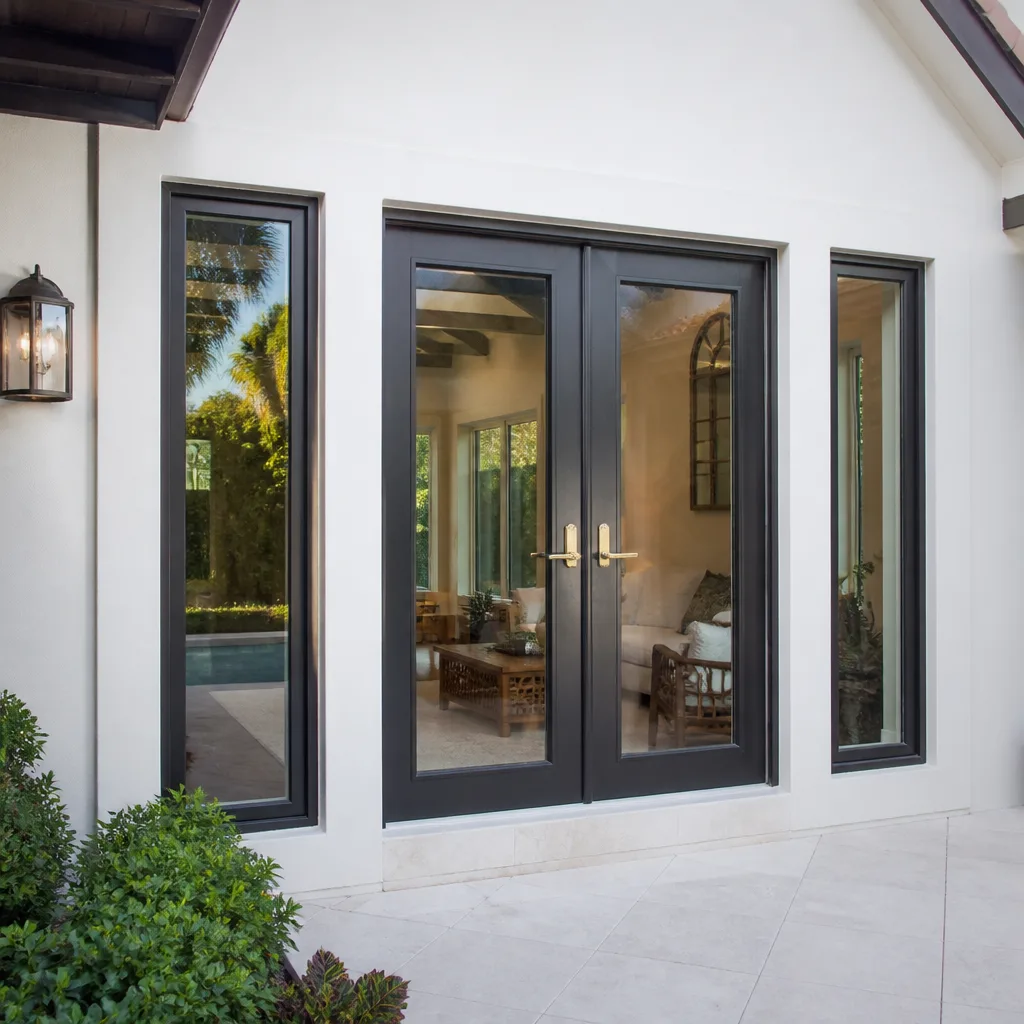 After
After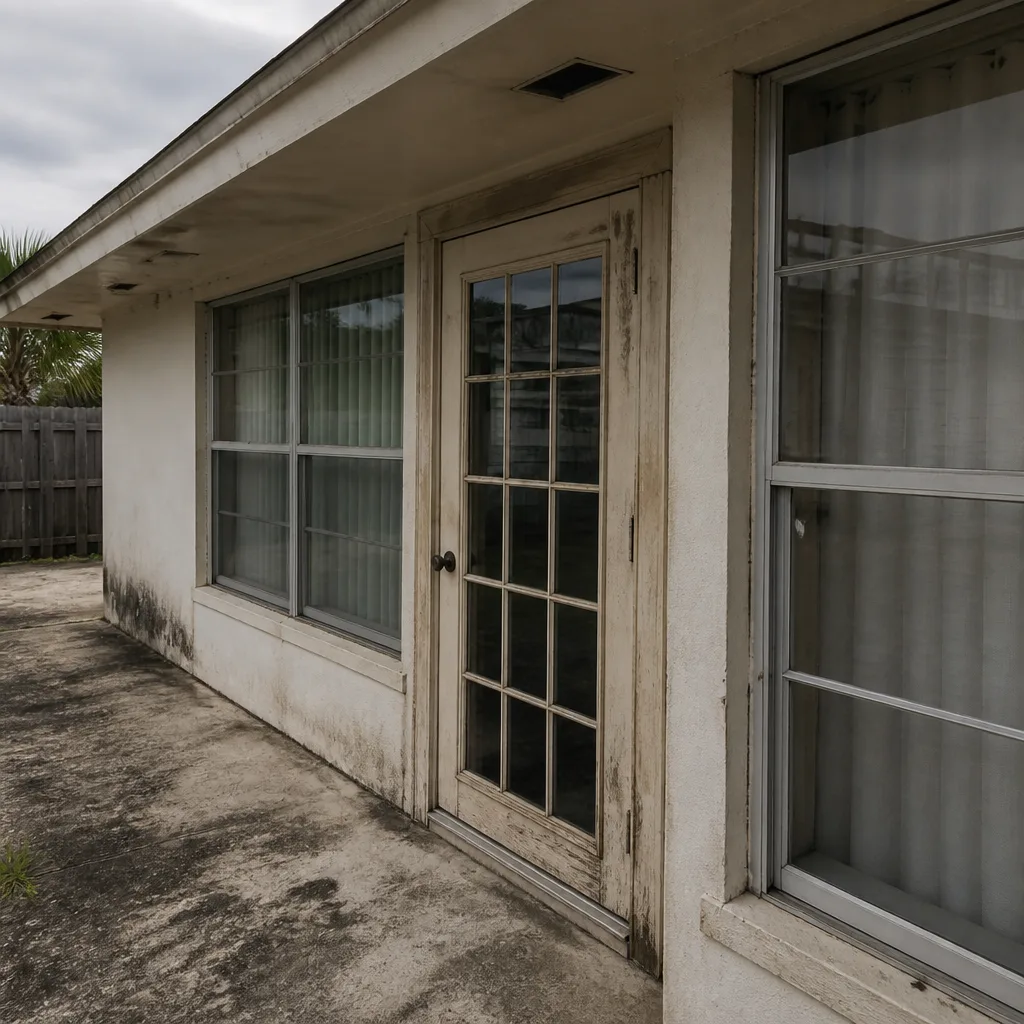 Before
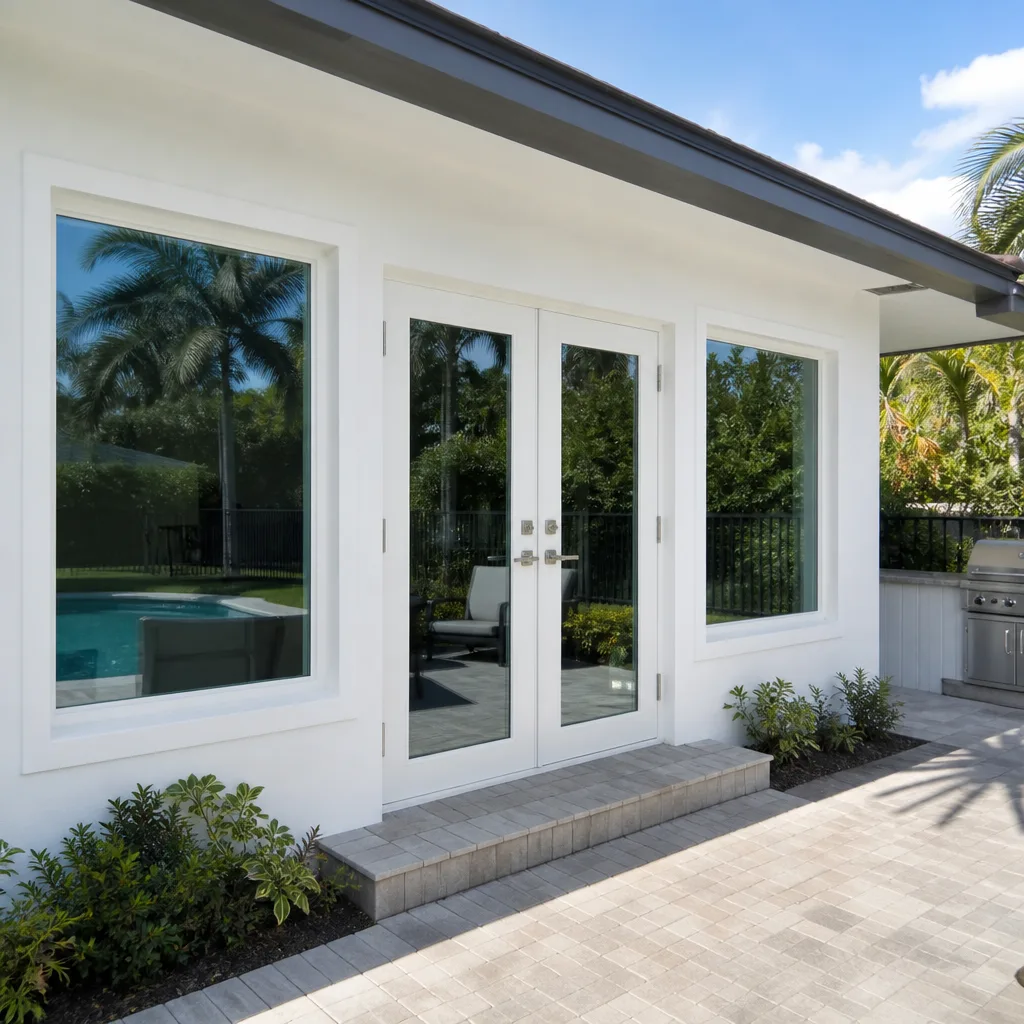 After
After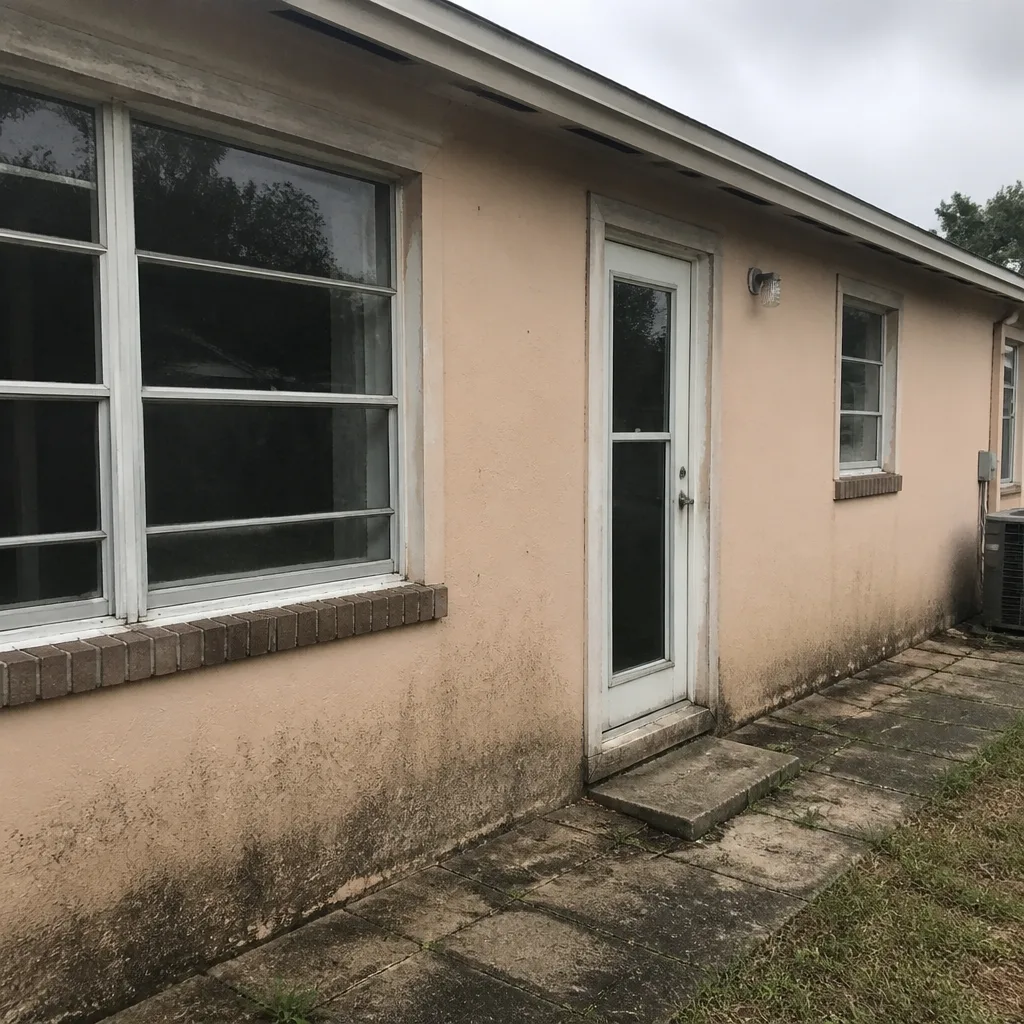 Before
 After
AfterHow to Hire a Windows & Doors Contractor in West Palm Beach: A Step-by-Step Guide
Florida’s DBPR license lookup takes about 90 seconds to run, yet fewer than 1 in 10 West Palm Beach homeowners check it before signing a window or door contract. That single skipped step is why Palm Beach County sees so many abandoned permits, half-finished installations, and liens filed against properties by unpaid suppliers. This guide walks you through the vetting process that actually protects you, from license verification to permit history to the fine print in your quote, and points you to more guides & resources for West Palm Beach homeowners. If you’re planning window or door work in West Palm Beach, what you learn here could save you tens of thousands of dollars and a legal headache that can drag on for years.
Quick Answer
To hire a windows and doors contractor in West Palm Beach, verify their Florida DBPR license and confirm they hold the correct classification for the work (a Specialty Glass & Glazing license for impact window replacement, not just a General Contractor license), pull their open and closed permit history with Palm Beach County, require the contractor’s name on the permit application, and get a written quote that explicitly covers permit fees, inspections, and manufacturer registration. Then confirm who will actually show up on install day and whether the business owner is reachable after the job. Call (561) 660-9539 to have a licensed West Palm Beach contractor walk you through the process for free.
Table of Contents
- Step 1: Verify the DBPR License (And Why the License Type Matters More Than You Think)
- Step 2: Pull the Contractor’s Permit History in Palm Beach County
- Step 3: Ask Who Pulls the Permit, and Get the Name in Writing
- Step 4: Read the Quote Like a Contract Lawyer (Red Flags That Signal Hidden Costs)
- Step 5: Verify Who Actually Shows Up: Owner-Operated vs. Sub-Contracted Crews
- Step 6: Ask the Right Questions About Impact Windows and West Palm Beach Code
- Step 7: Get the Warranty in Writing, and Know What It Actually Covers
- Step 8: Do the Final Pre-Sign Walkthrough
Step 1: Verify the DBPR License (And Why the License Type Matters More Than You Think)
Every legitimate window and door contractor in Florida must hold an active license through the Department of Business and Professional Regulation (DBPR). You can verify this at myfloridalicense.com in under two minutes. Type in the contractor’s name or license number, and check three things: the license is active (not delinquent or revoked), the expiration date is in the future, and there are no open complaints or disciplinary actions listed.
But here is where most West Palm Beach homeowners get it wrong: Florida has multiple license classifications, and they are not interchangeable. A General Contractor (GC) license allows a contractor to build, alter, or repair structures broadly. A Specialty Structure Contractor license is narrower. And a Specialty Glass & Glazing Contractor license specifically covers the installation of glass, windows, glazing systems, and related framing. For impact window replacement in West Palm Beach, where wind-load requirements, product approvals, and installation methods are regulated under the Florida Building Code, your installer legally must hold the Specialty Glass & Glazing classification. A GC license alone is not sufficient for that scope of work.
Why does this matter? Because unlicensed or misclassified contractors routinely underbid licensed specialists by 20 to 30 percent. They bank on homeowners never checking. And when the work fails a county inspection, or a window fails during a hurricane, the homeowner discovers their insurance claim is denied because the installation was never permitted by a properly licensed contractor. In West Palm Beach, where building code enforcement is active and wind mitigation credits depend on documented compliance, that mistake carries a steep price.
When you work with Winslow Windows & Doors home, you do not need to guess at our classifications. Our license number is published on our website and on every estimate. Ed Winslow has been a licensed contractor in Florida since before opening this company in 2011, and we hold the classifications required for the work we perform, including impact window and door installation.
What to Check on the DBPR Lookup
- License status is Active, not delinquent, inactive, or revoked
- License classification matches the work being performed (Glass & Glazing for window replacement, not just GC)
- Qualifying agent or license holder name matches the person who signed your quote
- No open complaints or disciplinary actions that suggest a pattern
- Address on file is a real Florida address, not a P.O. box or out-of-state mailbox service
Step 2: Pull the Contractor’s Permit History in Palm Beach County
A contractor can hold a valid license and still have a terrible permit record. In Palm Beach County, permits are public records, and you can search them through the county’s ePermits portal or the city of West Palm Beach’s building department. Search by the contractor’s name, not the company’s, since some contractors operate under multiple DBAs or have dissolved and re-formed LLCs.
What you are looking for is not just whether permits were pulled, but whether they were closed. In Palm Beach County, an open permit means the work was never final-inspected. That happens when a contractor walks off a job, when the work failed inspection and was never corrected, or when the contractor intentionally abandoned the permit to avoid paying the final fee. Open permits are invisible to most homeowners until they try to sell the house. At closing, a title search reveals every open permit attached to the property, and the seller is legally required to resolve them before the sale can proceed. That can mean hiring a new contractor to fix work that was never properly finished, paying outstanding fees, and delaying a closing by weeks.
We have seen this repeatedly in older West Palm Beach neighborhoods like El Cid, Flamingo Park, and Southland Park, where homes built in the 1940s and 50s have accumulated decades of permit history. One common scenario: a homeowner hires a contractor for door replacement in 2022, the contractor pulls a permit, does the work, and never schedules the final inspection. Three years later, the homeowner goes to refinance and the lender flags the open permit. The original contractor has changed companies or left the state. The homeowner now pays a new contractor to fix whatever minor issue blocked the inspection, just to close the permit.
Before you sign with any contractor in West Palm Beach, go to the county permit portal and search their name. Look at their last two years of activity. Do they have a history of permits pulled and closed in a reasonable timeframe? Or do you see a pattern of permits left open for months or years? The pattern tells you more about a contractor than any review site.
Step 3: Ask Who Pulls the Permit, and Get the Name in Writing
Here is a question most homeowners never think to ask: Whose name goes on the permit application? The answer determines who is legally responsible for the work. Under Florida law, the person or company named on the permit is the party of record. If something goes wrong, the owner of the permit is the one the county will pursue, the one who must correct violations, and the one who carries the liability.
Some contractors, especially larger operations and franchises, pull permits under a sub-contractor’s license or a third-party permit expediting company. This obscures who is actually responsible. If the sub-contractor walks off the job, or the permit expediter is in Tampa, the homeowner is left chasing a legal ghost. The contractor you hired might say, “That’s not our permit,” and technically they might be right.
When you hire window installation in West Palm Beach through Winslow, the permit is pulled under Winslow Windows & Doors, with Ed Winslow as the qualifier. That means the same name on your contract is the name on the permit is the name on the county’s records. If there is ever an issue, you know exactly who is accountable. We have operated this way since day one, and we are not changing it.
Ask every contractor you are considering these three permit questions:
- “Whose name and license number will appear on the permit application?” Get the answer in writing.
- “Will you schedule and be present for all required inspections?” A contractor who does not attend inspections is a contractor who does not care if the work passes.
- “When will the permit be closed, and will you provide me the closed permit documentation?” If they hedge on this, walk away.
Step 4: Read the Quote Like a Contract Lawyer (Red Flags That Signal Hidden Costs)
A quote is not a handshake. It is a legal document that sets the boundaries of what the contractor will and will not do. In West Palm Beach, where window and door replacement projects often run from $8,000 to $45,000 depending on the scope, a vague quote is a financial trap waiting to spring. The single biggest red flag we see: a quote that appears lower than every other bid because it silently excludes costs that every other contractor included.
Here is what to look for, line by line:
- Permit fees are listed as a separate line item. If the quote says “permits not included,” you will pay anywhere from $150 to $600 extra after you have already signed. A legitimate contractor knows the Palm Beach County fee schedule and includes it.
- Inspection scheduling is the contractor’s responsibility. Some low-bid contractors tell the homeowner to “call the county when you’re ready for inspection.” That is not your job. The permit holder must schedule inspections.
- Manufacturer registration is included. For impact windows from brands like PGT or CGI, the manufacturer requires registration with the homeowner’s name to activate the warranty. If the contractor does not register the products, your warranty may not exist. This should be in the quote.
- Disposal and haul-away. Old windows, door slabs, and construction debris do not disappear on their own. If it is not in the quote, expect an “extras” invoice or a pile of debris left at your curb.
- Stucco or trim repair around openings. In West Palm Beach’s older homes, the original window openings often have crumbling stucco or rotted wood trim. A contractor who knows the local housing stock includes a repair allowance. One who does not will discover “unforeseen conditions” mid-job and change-order you.
The fixed-price guarantee is the reason Winslow writes quotes that hold. When Ed Winslow gives you a number for window replacement in West Palm Beach, that number is the number you pay. No change orders on work we scoped. No surprise line items. No “I didn’t realize your stucco was in that condition” upcharges. We have been looking at West Palm Beach stucco since 2011. We know what is behind those windows.
Step 5: Verify Who Actually Shows Up: Owner-Operated vs. Sub-Contracted Crews
The contractor who signs your contract is not always the contractor who does the work. In South Florida, subcontracting is extremely common, especially among large franchise installers and retail chains. You might sign with a company whose name you recognize, only to have a crew arrive in an unmarked truck, wearing no uniform, working under a different license entirely. If something goes wrong, the company you signed with points at the sub. The sub points back at the company. You are stuck in the middle.
Here is how to verify who will actually be on your job:
- Ask: “Are your installers W-2 employees or 1099 subcontractors?” A company with W-2 installers maintains direct control over training, quality, and accountability. A company that subs out its installs does not.
- Ask: “Will the same crew be on the job from start to finish?” Some companies start a job with one crew and finish with another. That is a recipe for missed details.
- Ask: “What identification will your crew carry?” A professional operation has uniformed, ID-badged installers you can verify before you open the door.
This is where owner-operated businesses have a structural advantage. Winslow Windows & Doors is owned by Ed Winslow, and our installers are background-checked, uniformed, and trained to our standards. When you hire us, Ed’s name is on the door, on the permit, and on every job we do. That is not marketing language. It is the way the company is built. Ed has been answering calls, writing estimates, and standing behind work in West Palm Beach since 2011. No franchise can make that claim. No sub-contracted crew either.
Step 6: Ask the Right Questions About Impact Windows and West Palm Beach Code
West Palm Beach sits in the High Velocity Hurricane Zone (HVHZ), which is the strictest wind-design standard in the Florida Building Code. Impact windows installed here must meet HVHZ requirements, not just the statewide requirements. That means the window, the frame, the anchoring method, and the installation all have to work together as a tested, approved system. A window that is impact-rated but installed with the wrong fasteners or improper shimming will not perform as designed, and it will not pass county inspection.
When you are comparing quotes, ask these questions specifically about West Palm Beach compliance:
- “Are these products Miami-Dade or Florida Building Commission approved for HVHZ installation?” If the contractor cannot produce a Notice of Acceptance (NOA) for the exact product and installation method, stop the conversation.
- “Will you provide the product approval documentation with the contract?” A legitimate contractor attaches the NOA or FBC approval to the quote. This is required for the permit application in Palm Beach County anyway.
- “What is the design pressure rating on the windows you are quoting?” Design pressure (DP) ratings vary by window size and placement. A small window near a wall corner faces different wind loads than a large picture window in the middle of a wall. A contractor who quotes one DP rating for every window is not doing the engineering.
We install impact windows from authorized brands like CGI, CWS, and ECO Window Systems, and we have been doing it in West Palm Beach long enough to know which products work in which neighborhoods. A beachfront condo on Flagler Drive has different exposure than a 1960s ranch house off Forest Hill Boulevard. Both need impact protection. The right product and installation method differ, and getting that right is the difference between a window that protects your home and a window that just checks a box.
Step 7: Get the Warranty in Writing, and Know What It Actually Covers
Warranty language is where contractors hide the most. A verbal promise is not a warranty. A warranty is a written document that says exactly what is covered, for how long, under what conditions, and who pays for labor when something fails. In window and door work, there are actually three separate warranties, and most homeowners do not know to ask about all three:
- Manufacturer product warranty: Covers defects in the window or door itself, such as seal failure, glass defects, or hardware failure. Varies by brand. PGT and CGI, for example, offer different terms for impact vs. non-impact products.
- Installation workmanship warranty: Covers the labor and installation. This is what the contractor provides, and the terms are theirs to set. A 1-year workmanship warranty is industry minimum. Anything less is a red flag.
- Glass breakage warranty: Some manufacturers and installers offer glass breakage coverage for impact windows, and some do not. If it matters to you, get it in writing.
Here is the part most contractors will not tell you: the manufacturer warranty is often voided by improper installation. If the contractor installs the window incorrectly, the manufacturer will deny the warranty claim, and you will be left fighting the contractor who may or may not still be in business. That is why the workmanship warranty matters as much as the product warranty, and why you want a contractor with a documented track record of standing behind their work.
Our answer to the warranty question is the Done Right Promise. That is 100 years. If it is not done right, we make it right. Ed Winslow put his name on that promise, and his name is on every job we do. We can make a promise like that because we control our installers, our quality standards, and our follow-through. A national chain with a rotating cast of sub-contractors cannot.
Step 8: Do the Final Pre-Sign Walkthrough
Before you sign any contract for windows or doors in West Palm Beach, run through this final checklist-along with our Impact Windows Maintenance Checklist for West Palm Beach Homeowners. It takes ten minutes and prevents years of regret:
- License verified on DBPR. Active, correctly classified, no disciplinary actions. Done.
- Permit history clean. No pattern of abandoned or long-open permits. Done.
- Permit responsibility in writing. Contractor’s name on the permit, inspections scheduled by contractor, closed permit documentation provided. Done.
- Quote is line-item complete. Permits, inspections, manufacturer registration, disposal, trim repair. No “not included” lines. Done.
- Installer identity confirmed. W-2 employees or verified subs, uniformed, background-checked, same crew start to finish. Done.
- HVHZ compliance documented. NOA or FBC approval attached, DP ratings specified. Done.
- All three warranties in writing. Product, workmanship, and glass breakage where applicable. Done.
- The owner is reachable. If you have a problem six months after the install, is there a real person in West Palm Beach who will answer the phone? Not a call center in another state. A person. Done.
That last point is the one that separates a contractor you can trust from a contractor you hope you can trust. When the work is done and the check has cleared, the only thing standing between you and an unresolved problem is whether the contractor still answers the phone. Winslow has a live person answering our phones 24 hours a day, 7 days a week. Not a voicemail. Not a call center. A person. In West Palm Beach. It has been that way since 2011, and Ed Winslow does not plan to change it.
Common Mistakes to Avoid
- Skipping the DBPR check because the contractor “seemed professional.” Florida has licensed professional-looking frauds who have been doing this for years. The check takes 90 seconds. Do it every time.
- Assuming a GC license covers window work. It does not, not for impact window replacement in an HVHZ. You need the Specialty Glass & Glazing classification. Verify it.
- Not checking permit history before signing. The county records are public and free to search. A contractor with three open permits in Palm Beach County is a contractor who does not finish jobs.
- Accepting a quote that excludes permit fees or inspection scheduling. Those are not “extras.” They are core parts of the job. If they are missing from the quote, they are missing on purpose.
- Believing the manufacturer warranty covers installation errors. It does not. Improper installation voids the manufacturer warranty. Your workmanship warranty from the contractor is your real protection.
- Hiring based on the lowest bid with zero verification. In West Palm Beach, low bids are almost always low because the contractor is cutting corners you cannot see: unlicensed, unpermitted, uninsured, or using non-HVHZ products.
- Not confirming who will show up on install day. The salesman who sold you the job is rarely the installer. If you signed with a company that uses unverified sub-contractors, you are rolling the dice on who walks through your door.
When to Call a Professional
If any of the following describes your situation, you need a licensed West Palm Beach window and door contractor, not a handyman and not a DIY attempt: your home is in the HVHZ and needs impact-rated protection; your existing windows are original to a home built before the 2002 Florida Building Code; you are planning a full window and door replacement and the work requires county permits; your insurance company requires documented wind-mitigation compliance; or you have discovered signs of water intrusion, rot, or compromised framing around existing openings. This work requires specialized knowledge of product approvals, anchoring methods, and Palm Beach County inspection requirements. Winslow Windows & Doors offers free estimates in West Palm Beach. Call (561) 660-9539 and Ed Winslow will personally walk you through what your home needs.
Frequently Asked Questions
Window replacement in West Palm Beach typically ranges from $600 to $1,800 per opening for standard impact-rated windows, with full-home projects on a 1,500 to 2,500 square foot house running $12,000 to $35,000 depending on product grade, opening count, and stucco or trim conditions. The wide range reflects the difference between builder-grade impact windows and premium lines from manufacturers like CGI or ECO Window Systems, plus the condition of your existing openings. Call (561) 660-9539 for an exact quote. Estimates are free.
Yes. Window and door replacement in West Palm Beach requires a building permit through the city or Palm Beach County, and impact window installations must pass an HVHZ inspection. A contractor who tells you a permit is not needed for replacement windows is either misinformed or intentionally avoiding the inspection that verifies their work is code-compliant.
A window contractor performing impact window replacement in Florida must hold a Specialty Glass & Glazing Contractor license (or equivalent specialty classification) issued by the DBPR, not just a General Contractor license. The classification confirms the contractor has demonstrated competency in the specific codes, product approvals, and installation methods that window work requires. Always verify the classification on the DBPR lookup before signing.
A full window replacement in a typical West Palm Beach home takes 2 to 5 working days on-site, though the total timeline from contract to final inspection usually spans 3 to 6 weeks when you factor in product lead times (impact windows are often made to order), permit processing, and inspection scheduling. A contractor who promises all three of those phases in under a week is not telling you the truth about the permit and inspection process.
An open permit on your Palm Beach County property means the work was never final-inspected, and you, as the property owner, are legally responsible for resolving it. It will surface during a title search when you sell or refinance, and you will have to hire a contractor to correct any deficiencies and schedule the inspection, often years after the original work. This is why you should check a contractor’s permit history before hiring them, and require closed permit documentation after the job.
Yes, for most West Palm Beach homeowners. Impact windows provide storm protection without shutters, reduce exterior noise, and can lower windstorm insurance premiums when properly documented with a wind mitigation inspection. The upfront cost is higher than standard windows, but the insurance savings, storm protection, and avoidance of shutter installation and storage make them the standard choice for waterfront and older homes in the area. Call (561) 660-9539 for a free estimate and product recommendation for your specific home.
The Bottom Line
Hiring a windows and doors contractor in West Palm Beach is not about finding the lowest bid. It is about verifying the things most homeowners never check: the DBPR license classification, the Palm Beach County permit history, the name on the permit application, and the line items in the quote. A contractor who passes those checks is rare. A contractor who passes them and also answers the phone 24 hours a day with a live person is rarer still. Winslow Windows & Doors has been that contractor in West Palm Beach since 2011. Ed Winslow’s name is on the door, the license, and every job we do. Call (561) 660-9539 for your free estimate, and hire a contractor you can actually hold accountable.
Written by Ed Winslow, Owner at Winslow Windows & Doors, serving West Palm Beach since 2011.
Six Reasons Homeowners Choose Winslow Windows & Doors
Impact systems engineered to design pressures up to +/-100, matched to your wind zone - your openings hold when the storm arrives.
Low-E insulated impact glass from our manufacturer lines commonly cuts monthly cooling bills 20-30%.
Laminated impact glass shuts out up to 40% of outside noise - traffic, neighbors, weather.
Monitoring services run $30-90 a month. Laminated impact glass resists forced entry around the clock, with no subscription.
Florida homeowners average around 25% savings on the windstorm portion of their policy after protecting every opening - some homes qualify for more.
A full impact package upgrades curb appeal, buyer confidence and appraised value in one project.