
Last updated August 27, 2026
Free in-home measure and quote - PGT, CGI and CWS impact lines compared on your actual openings, style by style
 Before
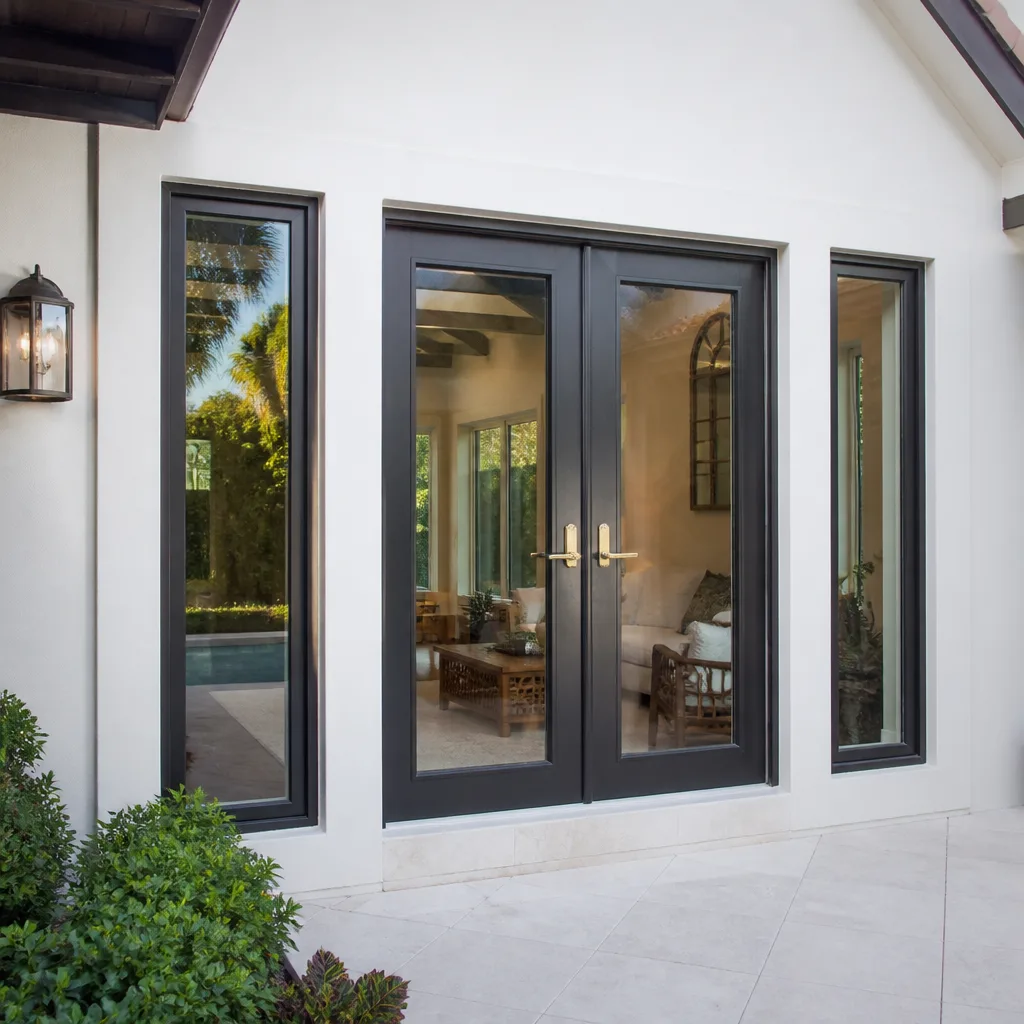 After
After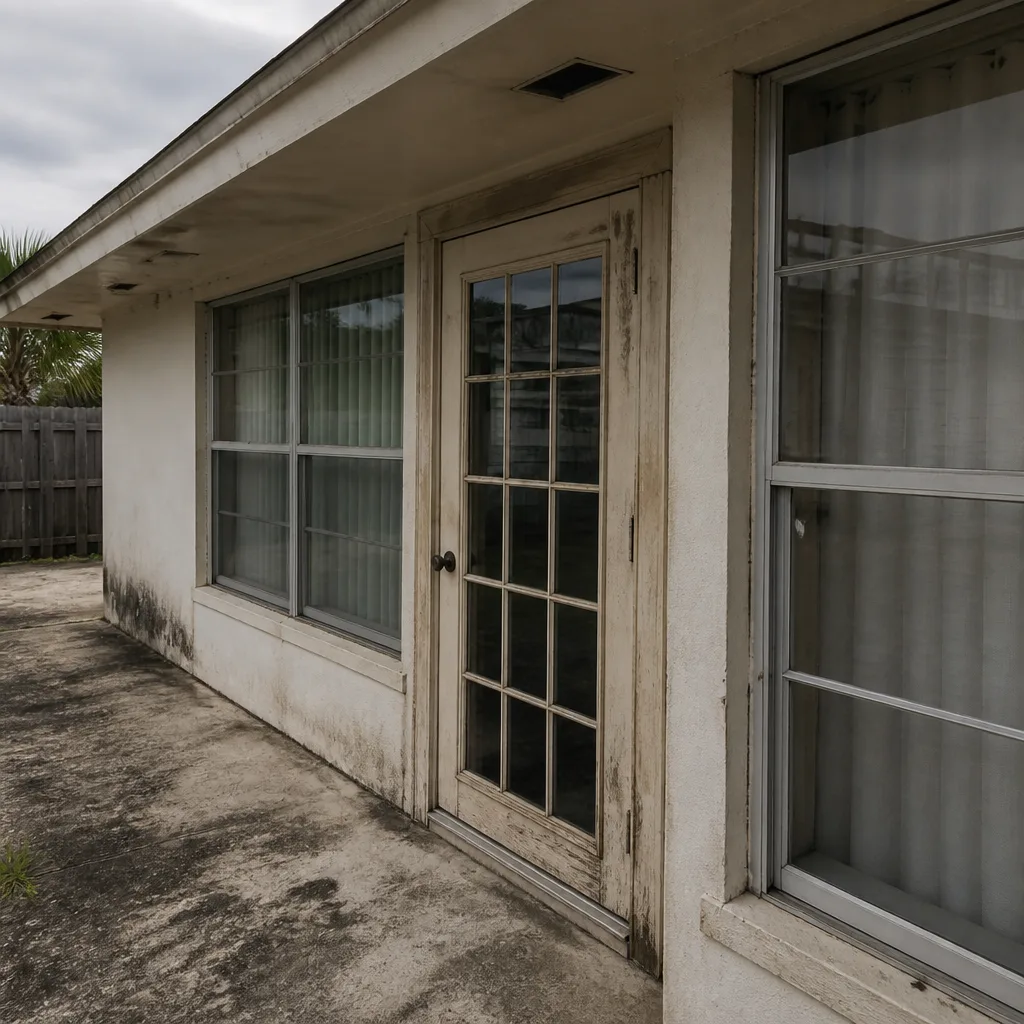 Before
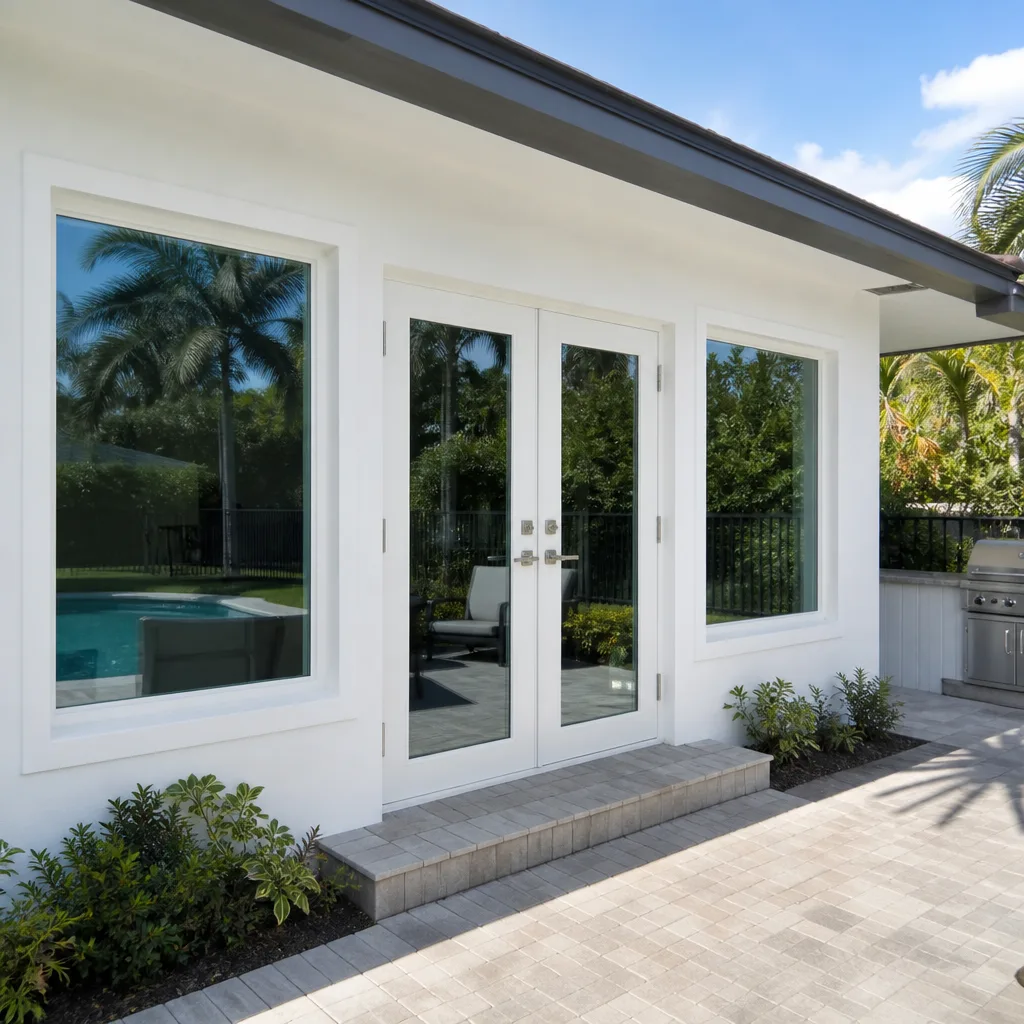 After
After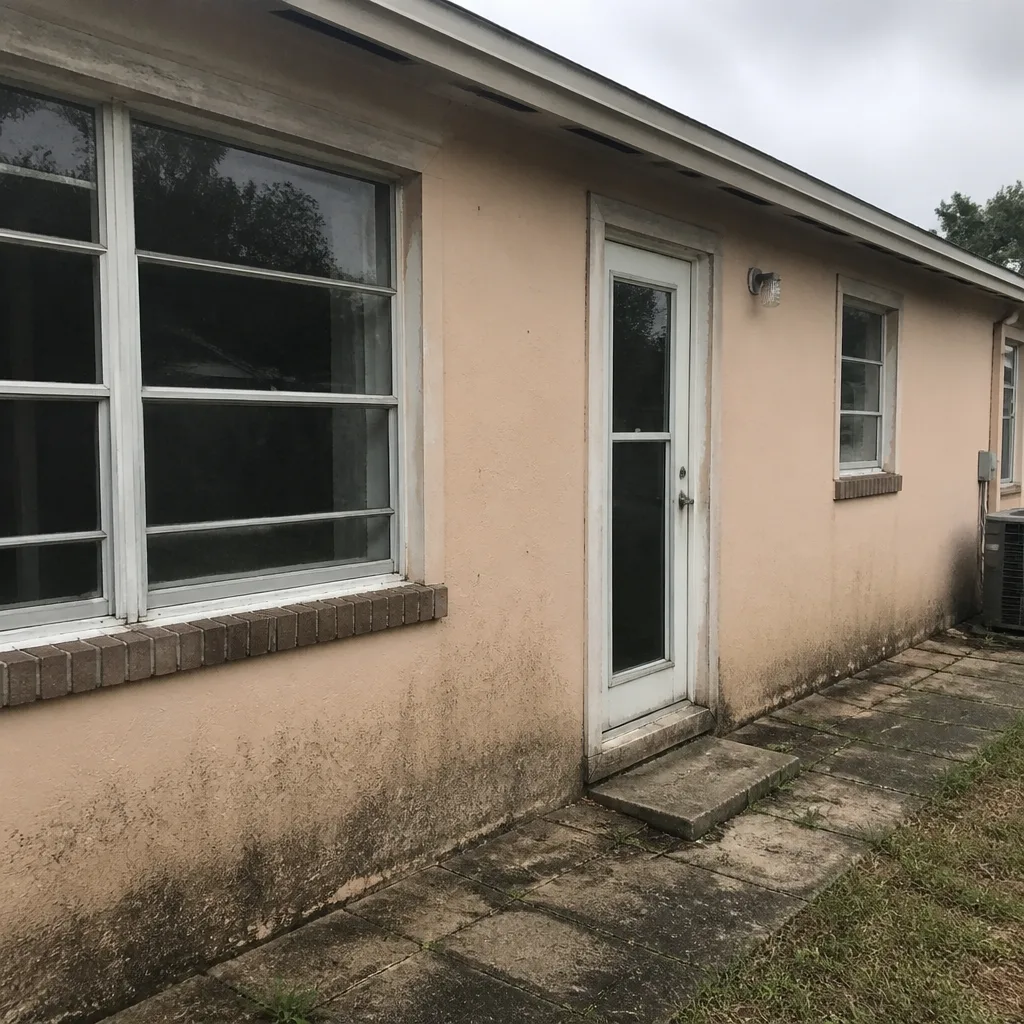 Before
 After
AfterWindows & Doors Warning Signs: A West Palm Beach Homeowner’s Reference Guide
Condensation trapped between the panes of an impact window is the most misread signal in South Florida homes. A homeowner from New York sees fogged glass and thinks “cosmetic annoyance.” A homeowner in West Palm Beach should see a failed seal that is quietly feeding mold inside the glazing unit and eroding the very impact rating that protects the house during hurricane season. The salt air, 75% average humidity, and UV intensity of Palm Beach County don’t just wear out windows and doors faster than northern climates – they change which warning signs matter, when they appear, and how urgently you need to act. This guide covers the signals that actually predict failure here, the ones northern-trained checklists miss entirely, and what each one costs if ignored. For a deeper dive into protecting your home, see The Complete Guide to Windows & Doors in West Palm Beach.
Quick Answer
The most reliable early warning signs of window and door failure in West Palm Beach are condensation or haze between glass panes, white powdery corrosion on aluminum frames, sticky or misaligned door operation that worsens seasonally, and water stains on interior drywall around openings. None of these are cosmetic – each one maps to a specific mechanical or structural problem with a known repair cost. A failed seal on an impact window runs roughly $180 to $400 to fix if caught early, while a rotted frame discovered after a season of ignored staining can push a full replacement past $2,000 per opening.
Table of Contents
- Warning Sign 1: Condensation or Haze Between the Glass Panes
- Warning Sign 2: White Rust on Aluminum, Red Rust on Steel
- Warning Sign 3: Popping, Cracking, and Groaning Sounds
- Warning Sign 4: Water Staining on Interior Walls and Sills
- Warning Sign 5: Sticky Doors and Windows That Won’t Latch
- Warning Sign 6: Chalking, Fading, and Brittle Weatherstripping
- What Your Documentation Means for Insurance Claims
- Common Mistakes to Avoid
- When to Call a Professional
- Frequently Asked Questions
Warning Sign 1: Condensation or Haze Between the Glass Panes
A double-pane or impact window has two sheets of glass separated by a sealed air space, often filled with argon gas or a similar insulator. When you see fog, droplets, or a milky haze inside that space – not on the room-facing surface where you can wipe it off – the seal around the perimeter of the glazing unit has failed. Moist South Florida air has entered the cavity. In West Palm Beach, where average relative humidity sits above 70% for most of the year, that trapped moisture does more than look bad. It breeds mold on the interior glass surfaces, and it destroys the insulation value of the window. For impact-rated glass, the problem runs deeper: the laminated inner layer and the air space work together to absorb and dissipate storm energy. A seal failure lets humidity attack the polyvinyl butyral (PVB) interlayer that holds the glass together on impact.
What you’ll notice, in order: a light haze that comes and goes with temperature shifts, then persistent fog that never fully clears, then water droplets that bead inside the glass. Mineral deposits from evaporated moisture eventually leave a permanent white film. By that point, the unit cannot be repaired. The fix is a glass replacement within the existing frame, which is far less expensive than a full window replacement. Expect to pay between $180 and $400 per window for glazing replacement in the West Palm Beach market, depending on glass size and whether the unit is impact-rated. A full frame replacement runs $900 to $2,500 or more per opening.
What to do:
- Photograph the fog or haze with the date visible in the image metadata. This matters for warranty claims.
- Check your window brand – PGT, CGI, CWS, and ES Windows all carry different seal warranties, some up to 10 years.
- Call for a glazing-only quote before anyone convinces you the entire window needs replacing. In our experience in West Palm Beach, roughly two-thirds of fogged units can be fixed without pulling the frame.
Warning Sign 2: White Rust on Aluminum, Red Rust on Steel
Aluminum is the dominant window and door frame material in Palm Beach County because it holds up to salt air better than wood and costs less than vinyl-framed impact systems. But “better” is not immune. The corrosion you see on aluminum frames is a white, chalky, blistering crust that technicians call white rust. It forms when the factory anodized or painted finish is scratched or worn through, exposing raw aluminum to the chloride salts carried in West Palm Beach’s coastal air. White rust expands as it forms. That expansion pushes frame corners apart, breaks miter joints, and creates exactly the gaps that let wind-driven rain into your wall cavity.
Red rust is a different and more urgent signal. Many impact-rated windows and doors in South Florida have steel reinforcements inside the aluminum frame channels – stiffening bars, anchor plates, or lintel connectors. If you see reddish-brown staining or rust blooms on the surface of a frame, the steel inside is corroding. Red rust on the exterior of an impact door usually means water has been entering the frame for months or years. The structural connection that holds the door in the wall is weakening. In a hurricane-impact scenario, that connection is doing a substantial part of the work.
The action level is simple: white rust is a repair-soon issue. Red rust is an inspect-this-month issue. A frame with surface white rust can often be cleaned, treated, and repainted or re-anodized, extending its life by years. A frame with visible red rust at the corners or hardware points almost certainly needs replacement, and the surrounding wall cavity should be opened to check for water damage to the rough opening.
Warning Sign 3: Popping, Cracking, and Groaning Sounds
Every window and door in West Palm Beach expands and contracts with the daily temperature swing. A six-foot sliding glass door frame will measurably change dimension between a 55-degree winter morning and a 90-degree afternoon. That movement is normal, and it produces soft ticks or pings where the frame meets the wall or the hardware. Those sounds are brief, irregular, and quiet. They happen once or twice during a temperature shift and then stop.
The sounds that mean trouble are different. A sharp cracking pop from the corner of a window frame during a temperature change – loud enough to make you look up – indicates the aluminum miter joint or the glazing bead has fractured. A groaning or creaking noise when you operate a door or crank a window points to a bent hinge leaf, a failing roller, or a frame that is twisting against the rough opening. In the worst cases, the anchor bolts that tie the window frame to the concrete block wall have begun to slip or pull. South Florida’s masonry construction means anchors are either tight or failing – there is no soft wood to gradually absorb movement.
How to sort the sounds:
- Soft ticks during temperature swings: normal. No action needed.
- Loud pops from corners while sitting untouched: frame joint or glass stress. Inspect the corner visually for hairline cracks.
- Creaking during operation: hardware or roller wear. Lubricate rollers, inspect hinges, tighten screws.
- Groaning combined with a window that is harder to open in the morning: frame racking or anchor movement. Stop using the window and schedule an inspection.
We’ve opened walls in West Palm Beach homes where a groaning window turned out to be hung on two of four anchors – the other two had corroded through entirely. The window was effectively floating in the opening, held by sealant. That is not a fixed-by-silicon situation.
Warning Sign 4: Water Staining on Interior Walls and Sills
Interior water stains around a window or door are the most informative warning sign a South Florida homeowner can read – because the stain’s location and pattern tell you exactly which of three problems you have. The three causes have radically different repair costs, and the repair scopes barely overlap.
Pattern one: staining or bubbling paint directly beneath the window, on the drywall below the sill. This is glazing seal failure. Condensation forms inside the window frame channel and runs down to the sill, then spills onto the drywall. The fix is resealing or reglazing the window, plus drywall repair. Minor cosmetic work, typically under $500 per window if caught before the drywall rots.
Pattern two: staining above the window or door, around the top corners, or spreading outward from the opening’s edges. This is flashing failure. The metal or tape flashing that laps the frame into the wall’s weather barrier has failed, and wind-driven rain is entering the wall cavity from above. In West Palm Beach’s summer afternoon storms – which routinely drive rain nearly horizontally – flashing failure lets a surprising volume of water enter quickly. The repair is more involved: the interior and exterior trim must be removed to access the flashing, the flashing replaced, and the wall inspected for mold. Figure $800 to $2,000 per opening, higher if the sheathing or wall framing shows water damage.
Pattern three: a faint, even staining that follows the bottom edge of the wall around the entire perimeter of the room. This is not the window at all. That is a humidity or slab moisture issue. The window is fine; the building envelope is not. Solve the moisture source before touching the glass.
Take a photo of any new stain with the date visible. Then run a finger over the stain. Crumbly or soft drywall means the leak has been active for months, not days.
Warning Sign 5: Sticky Doors and Windows That Won’t Latch
An impact door that sticks in summer but closes fine in winter is one of the most misdiagnosed problems in Palm Beach County. The standard homeowner assumption is that the door itself has warped or the hinges have sagged. Often, the door is perfectly fine. The problem is the concrete slab beneath it.
South Florida homes sit on slabs poured over sandy soil with a high water table. That soil expands and contracts seasonally. A slab edge that rises half an inch over ten years can bind a door at the top corner while the door slab itself remains true. The same movement cracks walls, tilts the lintel above the opening, and slowly transfers pressure through the entire frame assembly. Every time you force that door closed, you’re bending the frame anchor points a little more.
Here is the reliable diagnostic sequence:
- Open the door to 45 degrees. Let go. A door with sagging hinges will drift further open or closed on its own. A slab-bound door will stay put.
- Look at the gap between the door edge and the frame. A consistent gap all the way around means the door is fine and the frame is moving. A gap that is tight at the top latch side and wide at the bottom means the hinges have moved.
- Test the door at 9 a.m. and again at 4 p.m. Slab movement responds to soil moisture, so the stickiness will vary through the day. Hinge sag does not vary.
- Check the drywall at the top corners of the opening. Fresh hairline cracks that widen seasonally confirm frame or lintel movement.
If the slab or lintel is moving, replacing the door with a new one will not fix the problem. The underlying structure must be evaluated first. A structural inspection in West Palm Beach runs a few hundred dollars and is worth every cent before you spend $3,000 on a new impact door that will bind in its new frame just like the old one did.
Warning Sign 6: Chalking, Fading, and Brittle Weatherstripping
South Florida’s UV index hits “extreme” levels for months of the year, and nothing man-made stands still under that radiation. The first visible casualty is usually the paint or finish on the window frame: it chalks, turning powdery and dull, then fades unevenly. Chalking is not just aesthetic. Once the finish has broken down, the underlying aluminum is exposed to the salt air described earlier in this guide. The clock on white rust starts running.
The second casualty is the rubber and neoprene weatherstripping that seals the moving joints of windows and doors. In northern climates, weatherstripping sags and compresses. In West Palm Beach, it bakes. Heat and UV radiation break down the polymer chains until the material turns brittle and fractures. A door that once closed with a firm, soft thump now closes with a hard, rattly bang. You can see the weatherstripping cracking at the corners and pulling away from its retaining groove.
A quick check: close a dollar bill in the door and pull. It should resist firmly on all four sides. If it slides out freely at the bottom or latch side, the seal is gone. The same test works on double-hung windows, though you’ll want a smaller bill for the sash meeting rail.
Weatherstripping replacement is the cheapest repair in this entire guide – $60 to $250 per door or window when done properly with the correct profile for the frame. The cost of ignoring it is not cheap. Air leaks through failed seals are a primary driver of the humid indoor air that condenses on cold AC registers, feeds mold in wall cavities, and pushes cooling bills up by an estimated 10% to 15% in South Florida homes.
What Your Documentation Means for Insurance Claims
Here is the most useful piece of Florida-specific advice in this guide: your dated photos change the outcome of insurance claims. Florida property insurers are aggressive about attributing storm damage to pre-existing failure. If an impact window frame pulled away from the wall during a storm, a photographer was going to document that room eventually. The question is whether your file predates the adjuster’s.
A photo of corroded anchors taken six months before a hurricane, followed by the same window failing during the storm, gives your claim a documented timeline showing the failure mechanism was already active. Without that photo, the insurer may reasonably argue the damage originated with the storm and classify it under hurricane deductible terms – or deny it as deferred maintenance. The difference is thousands of dollars.
Build a simple documentation habit:
- Photograph any new warning sign the day you notice it. Phone cameras embed the date automatically. Do not use digital filters that alter the image.
- Store a copy off-site. Cloud storage or an email to yourself. If the photo only lives on the phone that is destroyed in the storm, it doesn’t exist.
- Photograph the same area every six months. A sequence of images showing gradual deterioration is more persuasive than a single image, and it helps you spot changes you might otherwise miss.
- Comply with the policy’s duty to mitigate. If you document a problem and then ignore it for a year, you may have weakened your own position. The reasonable response to discovering a failed seal or corroded frame is to get it evaluated and repaired. Insurance is not a maintenance plan.
Common Mistakes to Avoid
- Wiping condensation off the inside of glass without asking which side it’s on. Moisture on the room-facing surface is a dehumidifier problem – your window is fine. Moisture you cannot reach is a seal failure. The fix is completely different.
- Using pressure washers on window and door frames. High-pressure water forces its way past weatherstripping and into the wall cavity. West Palm Beach’s rough storms make flooding a risk already; adding a man-made water injection speeds up anchor corrosion remarkably.
- Replacing a door without diagnosing the slab. A new impact door in a binding opening will bind just like the old one. The slab has not moved because the door changed.
- Treating all window fog as equal. Fog in the glass cavity is a seal failure. But haze that appears only on the exterior surface in the morning is normal condensation forming on cold glass – common in South Florida homes with aggressive air conditioning. If you’re unsure, take a photo and send it to someone who knows what they’re looking at.
- Ignoring red rust on an impact door because the door still works. The door’s hardware is designed to hold the framed assembly closed when the anchors were doing their job. The anchors are failing. The first sign of that failure may be the door leaving the opening during a storm.
- Delaying repairs until before hurricane season. Every window and door company in Palm Beach County is booked solid in May and June. Warning signs spotted in January can be repaired in February with no wait. The same problem spotted in late June may wait weeks while a vulnerable opening faces peak storm season unprotected.
When to Call a Professional
Most of the inspection steps in this guide are observational – seeing, photographing, feeling with a finger. The repair work is not. Failed glazing seals require removing and replacing sealed glass units. Corroded anchors require cutting into the wall. A slab investigation requires tools and experience. None of these are weekend DIY projects. If you have visible corrosion at frame corners, water staining that has persisted more than a few days, or a door that binds harder with each passing month, schedule an evaluation. Winslow Windows & Doors offers free estimates in West Palm Beach – call (561) 660-9539 and a live person will answer, at any hour, day or night.
Frequently Asked Questions
Window repair in West Palm Beach ranges from about $60 for weatherstripping replacement to $250 for minor hardware repair, $150-$400 for glazing seal or glass replacement in an existing frame, and $900-$2,500 for full frame replacement of an impact window. The wide variation comes down to whether the frame itself can be saved. Call (561) 660-9539 for an exact quote – estimates are free.
Quality impact windows in West Palm Beach generally last 20-30 years in the frame, but the glazing seals, weatherstripping, and hardware have shorter service lives. Expect seal failures to begin appearing after 10-15 years in coastal areas with high UV and salt exposure. Interior windows often last longer than those facing direct ocean air. Regular inspection catches individual component failures while the frame is still sound, extending overall life substantially.
A foggy window can usually be repaired by replacing the glass unit while keeping the existing frame. Only the sealed glazing assembly is replaced, which costs significantly less than a full window replacement. In our experience in West Palm Beach, roughly two-thirds of fogged windows are glazing-replacement candidates. The main exception is when the frame itself shows corrosion, cracked corners, or failed anchors – then replacement is the correct scope.
Seasonal sticking that follows temperature rather than wear usually means the concrete slab or lintel is moving in response to soil moisture changes. South Florida’s sandy soil expands and contracts with rainfall and water-table shifts, and a slab edge can move enough to bind a door that worked fine in April. This is a structural question more than a door question, and it should be evaluated before you spend money on a replacement door.
Window seal failure is typically considered normal wear and tear, which standard Florida homeowners policies do not cover. The exception is when a covered event – a storm, a falling branch, an impact – directly damages the seal or glazing. This is why documentation matters: a dated photo showing a developing problem before a storm gives you a much stronger position if the storm worsens the failure. Call (561) 660-9539 for an honest assessment of what your window actually needs before you file.
The Done Right Promise is Winslow Windows & Doors’ commitment that if a job isn’t done right, we make it right – for 100 years, which is 36,500 days. It’s Ed Winslow’s name on the door and on every job we do, and the promise is that simple. No fine print. No expiration. No national chain offers anything remotely comparable because no national chain has an owner answering the phone in West Palm Beach.
Impact windows in West Palm Beach cost more than standard windows, but they protect your home during the storms that define South Florida living, reduce insurance premiums with most Florida carriers, cut cooling costs by blocking solar heat gain, and eliminate the need for storm shutters. The payback period varies by home size and insurer, but many West Palm Beach homeowners see insurance savings alone covering the premium cost of impact glass within 5-8 years. The security and noise-reduction benefits are immediate.
The Bottom Line
Windows and doors in West Palm Beach talk to you. Fog between panes says a seal has died. White rust says the finish failed. Red rust says the structure is declining. A sticky door in August may be telling you the slab moved. None of these messages get better with time, and all of them are cheaper to address the week you notice them than the month after a storm finds the weakness. The one thing that makes every warning in this guide less expensive: documentation. Dated photos, a six-month visual sweep of every opening, and a willingness to call for a free estimate when something changes – those habits cost nothing and have changed the financial outcome of more Florida claims than we can count. Winslow Windows & Doors has served West Palm Beach since 2011, and Ed Winslow still answers the phone. The one down the road. Explore more guides & resources to keep your home protected year-round.
Written by Ed Winslow, Owner at Winslow Windows & Doors, serving West Palm Beach since 2011.
Six Reasons Homeowners Choose Winslow Windows & Doors
Impact systems engineered to design pressures up to +/-100, matched to your wind zone - your openings hold when the storm arrives.
Low-E insulated impact glass from our manufacturer lines commonly cuts monthly cooling bills 20-30%.
Laminated impact glass shuts out up to 40% of outside noise - traffic, neighbors, weather.
Monitoring services run $30-90 a month. Laminated impact glass resists forced entry around the clock, with no subscription.
Florida homeowners average around 25% savings on the windstorm portion of their policy after protecting every opening - some homes qualify for more.
A full impact package upgrades curb appeal, buyer confidence and appraised value in one project.